When people first hear about NullField Lab, they often ask: "Is this like neurofeedback?" or "How does this compare to Muse, Emotiv, or other brain training devices?"
It's a reasonable question; both approaches involve brain optimization technology. But the comparison reveals a fundamental misunderstanding of what NullField Lab actually does.
Neurofeedback devices actively train your brain to produce specific patterns. They measure your current brainwave state, provide real-time feedback, and guide you toward desired states through operant conditioning and neuroplasticity.
NullField Lab doesn't train your brain at all. Instead, it removes environmental electromagnetic interference that may be preventing your brain from naturally achieving its optimal states.
Think of it this way:
Neurofeedback Approach
Philosophy: Train your brain to perform better despite environmental conditions
Metaphor: Learning to run faster while wearing ankle weights
Mechanism: Active learning and neuroplastic adaptation
NullField Lab Approach
Philosophy: Remove environmental obstacles preventing optimal brain function
Metaphor: Taking off the ankle weights so you can run naturally
Mechanism: Environmental optimization and interference reduction
Both approaches have merit. Neither is inherently "better." They address different aspects of brain optimization and are actually complementary rather than competitive.
Key Insight
Neurofeedback helps your brain learn to perform optimally despite environmental interference. NullField Lab removes the interference so your brain can perform optimally without needing special training.
The ideal scenario? Use both: remove environmental obstacles AND train enhanced performance capabilities.

Fundamental Paradigm Difference
The core distinction between these approaches lies in their underlying philosophy of what limits brain performance:
The Neurofeedback Paradigm
Brain Performance as Learned Skill
Core assumption: Your brain can learn to regulate its own activity patterns through feedback and practice, similar to learning any skill.
Intervention: Provide real-time information about brain states, reward desired patterns, shape behavior through operant conditioning.
Outcome: Neuroplastic changes that increase voluntary control over brain states and improve baseline function.
Analogy: Like meditation or biofeedback; you're training increased self-regulation capacity.
The NullField Lab Paradigm
Brain Performance as Environmental Quality
Core assumption: Your brain already knows how to function optimally, but environmental electromagnetic interference disrupts natural oscillatory patterns.
Intervention: Detect and compensate for ambient electromagnetic fields that interfere with gamma/beta brainwave frequencies.
Outcome: Removal of interference allows natural brain rhythms to emerge without additional training.
Analogy: Like noise-canceling headphones; not teaching you to hear better, just removing background interference.
Neither paradigm is wrong. Both identify real factors affecting brain performance. Neurofeedback addresses the brain's learned regulation capabilities. NullField Lab addresses environmental interference factors. Optimal outcomes likely require addressing both.
What is Neurofeedback?
Neurofeedback (also called EEG biofeedback or neurotherapy) is a therapeutic intervention that trains individuals to alter their brain activity patterns through real-time feedback.
How Neurofeedback Works
Measurement
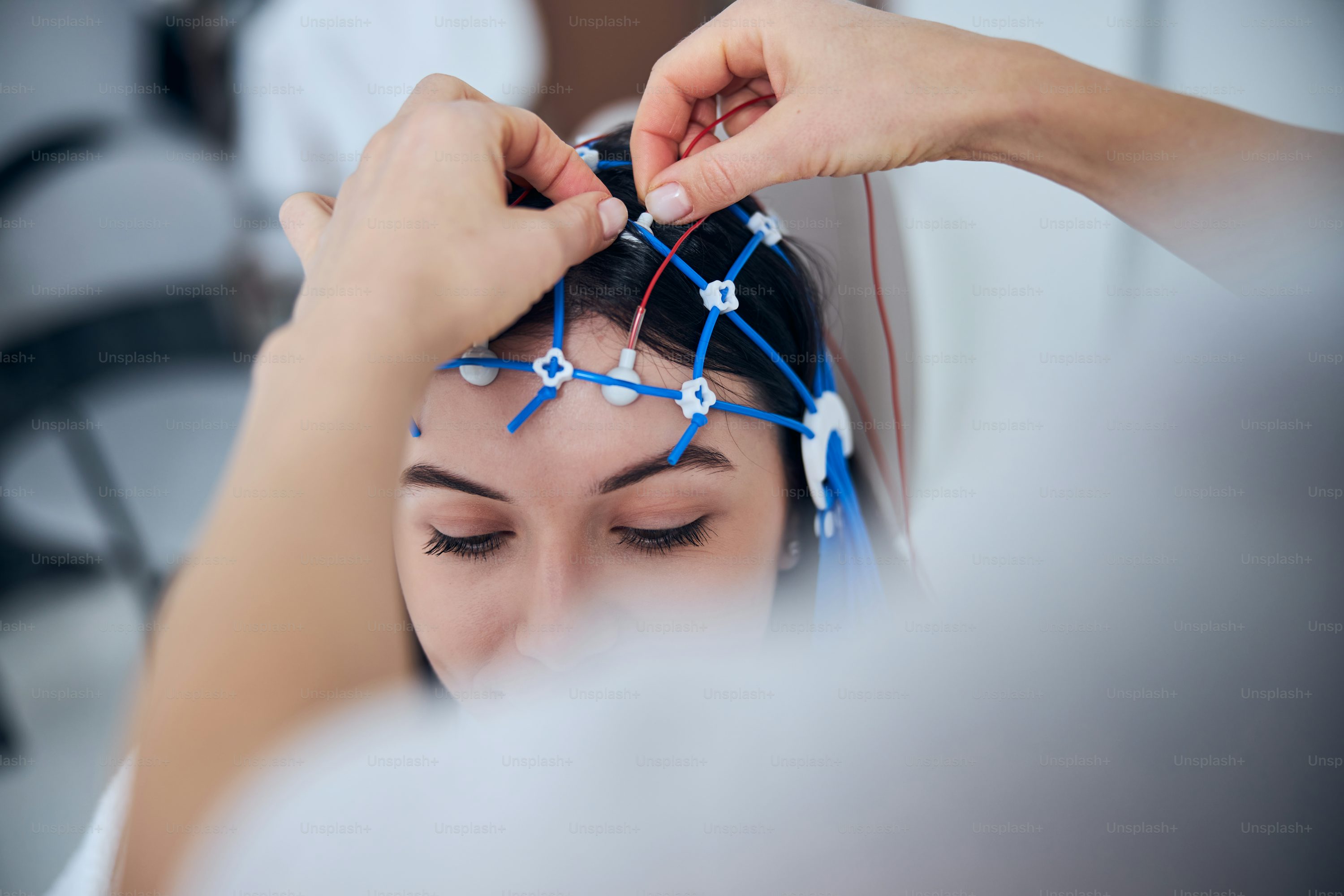
EEG sensors placed on the scalp measure electrical activity from neurons firing in the brain. Different sensor locations measure activity from different brain regions.
Processing
Signals are processed in real-time to extract relevant brainwave frequencies (delta, theta, alpha, beta, gamma) and spatial patterns. Software identifies whether the brain is in a desired or undesired state.
Feedback
Visual, auditory, or tactile feedback indicates when the brain achieves target states. This might be a game that advances when you're focused, music that plays when you're relaxed, or visual rewards when you achieve calm.
Learning
Through operant conditioning and neuroplasticity, the brain gradually learns to produce desired patterns more reliably. With repeated sessions, changes become more automatic and enduring.
Common Neurofeedback Devices
Clinical Grade
- BrainMaster: Professional multi-channel systems ($5,000-$15,000)
- Neurofeedback Systems: Clinical EEG platforms for therapy practices
- Training: Requires practitioner training and certification
- Use: ADHD, anxiety, PTSD, peak performance training
Consumer Grade
- Muse: Meditation headband ($250-$400)
- Emotiv: EEG headsets for research and training ($300-$800)
- NeuroSky: Single-sensor devices ($100-$200)
- Use: Meditation training, stress reduction, sleep improvement
What Neurofeedback Can Address
Research supports neurofeedback efficacy for various conditions:1,2,3
- ADHD: Training increased focus and reduced impulsivity (strong evidence)
- Anxiety: Learning to downregulate excessive beta activity
- PTSD: Modulating hyperarousal and fear responses
- Epilepsy: Seizure reduction through SMR training
- Insomnia: Training pre-sleep brain states
- Peak performance: Athletic and cognitive optimization
- Depression: Frontal alpha asymmetry training (mixed evidence)

What is NullField Lab?
NullField Lab is an environmental EMF compensation system that detects and addresses electromagnetic interference with brain oscillations, specifically targeting power grid frequencies that overlap with gamma and beta brainwaves.
How NullField Lab Works
Detection
Magnetometer sensors detect ambient electromagnetic field frequencies. The system automatically scans for 50Hz (Europe/Asia/Australia) or 60Hz (Americas) power grid interference and tracks real-time frequency variations with 0.01Hz precision.
Analysis
Digital signal processing algorithms identify the specific interference pattern and calculate how it overlaps with natural brainwave frequencies. 50Hz creates direct gamma interference; 60Hz creates beta beat frequency interference.
Compensation
The system generates audio frequencies designed to maintain stable brainwave entrainment despite grid interference. Instead of trying to add frequencies to your brain, it creates compensatory offsets that preserve your natural oscillatory patterns.
Adaptation
Continuous real-time tracking adjusts compensation as grid frequency fluctuates throughout the day. The system also adapts to circadian rhythms, supporting different brainwave states at different times (gamma for daytime focus, alpha for evening relaxation, delta for nighttime sleep).
What NullField Lab Addresses
NullField Lab specifically targets electromagnetic interference effects:
- 50Hz gamma disruption: Direct interference with 40Hz cognitive processing in Europe/Asia/Australia
- 60Hz beta interference: 20Hz beat frequency creation promoting anxiety in the Americas
- Attention deficits: Difficulty maintaining focus due to disrupted gamma synchronization
- Baseline anxiety: Elevated stress from chronic high-beta interference
- Sleep disruption: Interference with natural circadian rhythm transitions
- Mental fatigue: Excessive energy expenditure fighting environmental interference
Important: Research Tool, Not Medical Device
NullField Lab is a personal research tool for exploring EMF compensation effects, not a medical device or treatment. Unlike neurofeedback (which has FDA clearance for certain conditions), NullField Lab makes no medical claims and is designed for personal experimentation only.
NullField Lab is NOT included in the Australian Register of Therapeutic Goods (ARTG). It does NOT treat, cure, or prevent any disease or medical condition, including but not limited to:
- ADHD (Attention Deficit Hyperactivity Disorder)
- Anxiety disorders or panic disorders
- Depression or mood disorders
- PTSD (Post-Traumatic Stress Disorder)
- Epilepsy or seizure disorders
- Insomnia or sleep disorders
- Autism spectrum disorder
- Any other psychiatric, neurological, or medical condition
NullField Lab is solely for personal research into environmental electromagnetic compensation. It makes no therapeutic claims and is not a substitute for professional medical care. For any health concerns, consult qualified healthcare professionals.
Mechanism of Action Comparison
| Aspect | Neurofeedback Devices | NullField Lab |
|---|---|---|
| Primary Mechanism | Operant conditioning and neuroplasticity training | Environmental electromagnetic interference compensation |
| Brain Measurement | Yes, continuous EEG monitoring | No, measures environment, not brain |
| Feedback Loop | Real-time feedback about brain states | No feedback, passive compensation |
| User Effort Required | High, active mental training during sessions | None, runs passively in background |
| Time to Effect | Weeks to months (neuroplastic changes) | Immediate (environmental change) |
| Persistence After Stopping | Long-lasting (learned brain patterns) | None (effect stops when compensation stops) |
| What Changes | Brain's learned self-regulation capacity | Environmental electromagnetic context |
| Neuroplasticity Required | Yes, core mechanism | No, no brain training involved |
| Session Structure | Discrete training sessions (20-60 min) | Continuous passive operation (24/7 possible) |
| Skill Development | Develops voluntary state control | No skill development, environmental tool |
Key Distinction: Neurofeedback changes your brain. NullField Lab changes your environment. Both can affect your mental state and cognitive performance, but through completely different pathways.

Cost & Accessibility Comparison
Neurofeedback Costs
Clinical Neurofeedback
Practitioner-guided therapy:
- Initial assessment: $200-$500
- Per session cost: $75-$200
- Typical treatment: 20-40 sessions
- Total investment: $1,500-$8,000+
Pros: Professional guidance, clinical-grade equipment, personalized protocols, insurance may cover (rare)
Cons: High cost, requires travel to appointments, limited availability in some areas
Home Neurofeedback Systems
Consumer devices for self-training:
- Entry-level (NeuroSky, basic Muse): $100-$250
- Mid-range (Muse S, Emotiv Insight): $300-$500
- Advanced (Emotiv EPOC, multi-channel): $800-$1,500
- Professional home systems: $3,000-$8,000
Ongoing costs: Subscription apps ($10-40/month), replacement electrodes ($20-50/year)
Pros: One-time purchase, train at home, own your data
Cons: Steeper learning curve, no professional oversight, variable quality
NullField Lab Costs
Open-Source Research Tool
Free web application:
- Web app access: Free (open-source)
- Device requirements: Smartphone with magnetometer (most modern phones)
- Headphones: Any standard audio headphones ($10-$100+)
- Subscription fees: None
- Total investment: $0-$100 (headphones only)
Optional hardware upgrade path:
- Precision magnetometer module: ~$50
- Helmholtz coil system (future): ~$200-500
Pros: Free, no practitioner needed, works 24/7, no recurring costs
Cons: Research tool only (not medical device), effects only persist during use, theoretical basis still being validated
Neurofeedback Investment
- Higher upfront and ongoing costs
- Time investment in training sessions
- Learning curve for effective use
- Permanent neuroplastic gains
- FDA-cleared for some conditions
NullField Lab Investment
- Free and open-source
- No time investment (passive)
- Minimal learning curve
- Effects end when stopped
- Research tool (no medical approval)
Learning Curve & Ease of Use
Neurofeedback Learning Process
Gradual Skill Acquisition
Initial sessions (1-10): Learning to recognize feedback signals, understanding what different brain states feel like, developing initial control strategies. Progress may feel slow or inconsistent.
Middle sessions (10-30): Increased control over target states, faster transitions, beginning to generalize skills outside training. Noticeable improvements in target symptoms.
Advanced sessions (30+): Automatic control, sustained effects outside sessions, ability to self-regulate without external feedback. Skills become integrated into daily life.
Challenges: Requires consistent practice, mental effort during sessions, patience through plateaus, ability to recognize internal states.
NullField Lab Learning Process
Minimal User Learning Required
Setup (one time, 5-10 minutes): Open web app, grant sensor permissions, confirm automatic grid detection, start compensation. Optional: configure circadian schedule preferences.
Daily use (ongoing): Simply leave running in background. No active mental effort, no training sessions, no skill development needed. System operates autonomously.
Challenges: Minimal, main requirement is having compatible smartphone and headphones. Some users may need to experiment with timing (daytime only vs 24/7) or audio volume levels.
| Aspect | Neurofeedback | NullField Lab |
|---|---|---|
| Setup Complexity | Moderate to High (sensor placement, calibration) | Low (automatic detection) |
| Session Preparation | 5-15 minutes (electrode application, setup) | None (always ready) |
| During Use | Active mental engagement required | No user involvement needed |
| Skill Mastery Timeline | Weeks to months of practice | No skill mastery needed |
| Professional Guidance Helpful? | Yes, especially for clinical applications | No, fully autonomous system |
| Maintenance | Regular (electrode cleaning, calibration) | Minimal (software updates only) |
| Portability | Moderate (requires setup time) | High (runs on smartphone) |
| Integration with Life | Requires dedicated session time | Runs during normal activities |
Scientific Evidence Base
Neurofeedback Evidence
Established Research Base
History: Over 50 years of research since first demonstrations in the 1960s-70s
Publication volume: Thousands of peer-reviewed studies, hundreds of clinical trials
Meta-analyses available: Multiple systematic reviews aggregating evidence across studies
Strongest evidence for:1,2,3,4
- ADHD: Level 1 evidence (best support) for symptom reduction, effect sizes comparable to medication in some studies
- Epilepsy: Level 2 evidence for seizure reduction, particularly SMR training protocols
- Anxiety: Level 2-3 evidence for anxiety reduction, particularly alpha training
- Peak performance: Positive evidence in athletic and cognitive domains
Moderate/mixed evidence for: Depression, PTSD, autism spectrum disorder, chronic pain
Limitations: Many studies have methodological limitations (small samples, lack of appropriate control conditions, publication bias). Placebo effects are significant. Effect sizes vary widely between individuals.
NullField Lab Evidence
Emerging Theoretical Framework
Status: Novel approach based on established neuroscience principles but lacking direct clinical validation
Supporting evidence:
- Power grid EMF interference with EEG: Well-documented artifact in neuroscience research, 50Hz/60Hz contamination requires filtering5
- Gamma oscillations and cognition: Strong evidence linking 40Hz gamma to attention, consciousness, cognitive binding6,7
- Beta activity and anxiety: Elevated high-beta (18-25Hz) consistently associated with anxiety disorders8
- Brainwave entrainment effects: External rhythmic stimuli can influence brain oscillations (established phenomenon)9
Research gaps: No peer-reviewed studies specifically testing NullField Lab's EMF compensation approach. The hypothesis that removing grid frequency interference improves cognitive function remains theoretical, extrapolated from related research.
Current status: Personal research tool for self-experimentation. Anecdotal reports only, no controlled trials, no published efficacy data.
Evidence Comparison Summary
Neurofeedback: Established field with substantial research evidence. FDA-cleared for stress reduction and relaxation. Level 1 evidence for ADHD. Generally considered safe and effective for multiple conditions, though individual response varies.
NullField Lab: Novel experimental approach built on sound neuroscience principles but lacking direct validation studies. Currently a research tool for personal experimentation, not a proven therapeutic intervention. Users should approach with appropriate scientific skepticism.
Best Use Cases
Choose Neurofeedback When...
- Clinical diagnosis: You have ADHD, anxiety disorder, PTSD, or epilepsy and want evidence-based treatment
- Skill development: You want to learn voluntary control over your mental states
- Peak performance: You're an athlete, musician, or professional seeking performance enhancement
- Long-term change: You want neuroplastic changes that persist after training ends
- Professional guidance: You prefer clinician oversight and personalized protocols
- Proven interventions: You want approaches with established research evidence
- Committed practice: You can dedicate regular time to training sessions
- Budget available: You can invest $1,000+ in equipment or clinical sessions
Choose NullField Lab When...
- Experimentation: You're interested in exploring EMF compensation effects as personal research
- No time commitment: You want passive optimization without training sessions
- Budget constraints: You need a free, accessible approach
- 24/7 support: You want continuous operation including during sleep
- Environmental sensitivity: You suspect EMF exposure affects your cognition or mood
- Gamma/beta issues: You have difficulty with focus (gamma) or elevated anxiety (beta)
- Complement other approaches: You want to optimize environment while doing neurofeedback or other training
- Curiosity: You want to explore whether grid frequency compensation makes a difference for you personally
Why They're Complementary, Not Competitive
The most important insight from this comparison: neurofeedback and NullField Lab address different limiting factors in brain performance.
The Multi-Factor Model of Brain Performance
Optimal brain function depends on multiple factors:
- Neurological capacity: Brain structure, neurochemistry, genetic factors
- Learned regulation: Self-regulation skills, attentional control, emotional management
- Environmental quality: EMF exposure, light, noise, air quality, sleep environment
- Physiological state: Sleep, nutrition, exercise, stress, hormones
- Psychological factors: Motivation, beliefs, mental health, cognitive strategies
Neurofeedback primarily addresses learned regulation. NullField Lab primarily addresses environmental quality. Both are legitimate, neither is complete.
Complementary Benefits
Neurofeedback Provides
- Active skill development for state control
- Neuroplastic changes that persist
- Ability to self-regulate in any environment
- Clinical efficacy for specific disorders
- Professional guidance and protocols
NullField Lab Provides
- Passive environmental optimization
- Immediate reduction of EMF interference
- 24/7 operation without effort
- Free, accessible implementation
- Automatic grid frequency adaptation
The Synergistic Hypothesis
There's reason to believe these approaches might work better together than either alone:
- Clearer feedback signals: If NullField Lab reduces environmental noise, neurofeedback training might be more precise and effective
- Faster learning: Training in an optimized electromagnetic environment might accelerate neuroplastic gains
- Higher ceiling: With environmental interference removed, neurofeedback training might achieve higher performance levels
- Better maintenance: Neurofeedback skills might be easier to maintain when environment is optimized
This remains speculative; no research has tested combined use. But the theoretical basis is sound.

Using Both Together
For those interested in maximizing brain optimization, combining approaches may offer additive or synergistic benefits:
Recommended Integration Strategies
Environmental Foundation + Active Training
Approach: Start with NullField Lab to optimize your electromagnetic environment (free, passive). Once that's established, add neurofeedback training for active skill development.
Rationale: Remove environmental obstacles first, then train enhanced capacities on that optimized foundation.
Analogy: Like learning to run: first remove ankle weights (NullField), then train speed and endurance (neurofeedback).
Enhanced Neurofeedback Environment
Approach: Run NullField Lab during neurofeedback training sessions to create an optimized electromagnetic environment for learning.
Rationale: If EMF interference affects brain oscillations, training in a compensated environment might produce clearer signals and faster learning.
Implementation: Start NullField Lab before each neurofeedback session, leave running throughout training.
Continuous Optimization + Periodic Training
Approach: Run NullField Lab 24/7 for continuous environmental optimization. Add regular neurofeedback sessions (weekly or monthly) for targeted skill development.
Rationale: Maintain optimal baseline environment constantly while periodically advancing self-regulation capabilities.
Analogy: Like maintaining clean air quality (NullField) while also doing breathing exercises (neurofeedback).
Potential Combination Benefits
- Higher signal-to-noise ratio: Less EMF interference may mean clearer EEG signals during neurofeedback
- Faster neuroplastic changes: Training in optimized environment might accelerate learning
- Better generalization: Skills learned in compensated environment might transfer better to real-world contexts
- Reduced mental fatigue: Less energy fighting environmental interference during training
Research Needed
These combination strategies are theoretical and untested. No research has examined whether NullField Lab EMF compensation enhances neurofeedback training outcomes. Individual experimentation is necessary to determine personal benefit.
Which Approach is Right for You?
Consider your specific situation, goals, and resources:
Decision Framework
Clinical Need
If you have diagnosed ADHD, anxiety disorder, PTSD, or epilepsy:
→ Prioritize neurofeedback (established evidence, FDA clearance for some conditions, clinical protocols available)
→ Consider NullField Lab as free supplementary environmental optimization
Experimental Interest
If you're curious about EMF effects and want to experiment:
→ Start with NullField Lab (free, easy to try, immediate feedback on whether it affects you)
→ If you notice benefits and want to go further, consider adding neurofeedback for skill development
Budget Limited
If cost is a primary constraint:
→ Use NullField Lab exclusively (free, no investment required)
→ If it provides value and budget later allows, consider entry-level neurofeedback devices ($100-250)
Peak Performance
If you're optimizing athletic or cognitive performance:
→ Use both approaches (environmental optimization + active skill training = highest potential)
→ Many elite performers use neurofeedback; adding environmental optimization may provide additional edge
Trying Both: Suggested Sequence
Baseline Assessment
Track your cognitive performance, mood, sleep quality, and any relevant symptoms for 4 weeks without any intervention. Use consistent metrics (attention tests, mood scales, sleep logs).
NullField Lab Trial
Add NullField Lab compensation and continue tracking the same metrics. Note any changes. Since it's free and easy, this is a low-risk first experiment.
Decision Point
Review data. If NullField Lab showed benefit, continue using it. If you want to add neurofeedback, begin with consumer device or seek clinical practitioner. If NullField showed no benefit, you can discontinue or try optimizing parameters.
Neurofeedback Integration (Optional)
If adding neurofeedback, maintain NullField Lab for environmental optimization while beginning neurofeedback training. Track whether combined approach produces additive benefits.
No cost, no commitment. Experiment with EMF compensation today
References
- Arns, M., Heinrich, H., & Strehl, U. (2014). Evaluation of neurofeedback in ADHD: The long and winding road. Biological Psychology, 95, 108-115. PMID: 24321363
- Micoulaud-Franchi, J. A., McGonigal, A., Lopez, R., et al. (2015). Electroencephalographic neurofeedback: Level of evidence in mental and brain disorders and suggestions for good clinical practice. Neurophysiologie Clinique, 45(6), 423-433. PMID: 26482304
- Strehl, U., Aggensteiner, P., Wachtlin, D., et al. (2017). Neurofeedback of slow cortical potentials in children with attention-deficit/hyperactivity disorder: A multicenter randomized trial controlling for unspecific effects. Frontiers in Human Neuroscience, 11, 135. Frontiers
- Tan, G., Thornby, J., Hammond, D. C., et al. (2009). Meta-analysis of EEG biofeedback in treating epilepsy. Clinical EEG and Neuroscience, 40(3), 173-179. PMID: 19715180
- Usakli, A. B. (2010). Improvement of EEG signal acquisition: An electrical aspect for state of the art of front end. Computational Intelligence and Neuroscience, 2010, Article 630649. PMC
- Fries, P. (2015). Rhythms for cognition: Communication through coherence. Neuron, 88(1), 220-235. Cell Press
- Iaccarino, H. F., Singer, A. C., Martorell, A. J., et al. (2016). Gamma frequency entrainment attenuates amyloid load and modifies microglia. Nature, 540(7632), 230-235. Nature
- Vytal, K. E., Cornwell, B. R., Arkin, N., et al. (2012). Describing the interplay between anxiety and cognition: From impaired performance under low cognitive load to reduced anxiety under high load. Psychophysiology, 49(6), 842-852. PMID: 22332819
- Thut, G., Schyns, P. G., & Gross, J. (2011). Entrainment of perceptually relevant brain oscillations by non-invasive rhythmic stimulation of the human brain. Frontiers in Psychology, 2, 170. Frontiers
- Hammond, D. C., Bodenhamer-Davis, G., Gluck, G., et al. (2011). Standards of practice for neurofeedback and biofeedback. Journal of Neurotherapy, 15(4), 305-361. Taylor & Francis
- Gruzelier, J. H. (2014). EEG-neurofeedback for optimising performance. I: A review of cognitive and affective outcome in healthy participants. Neuroscience & Biobehavioral Reviews, 44, 124-141. PMID: 24709068
- Herrmann, C. S., & Demiralp, T. (2005). Human EEG gamma oscillations in neuropsychiatric disorders. Clinical Neurophysiology, 116(12), 2719-2733. ScienceDirect
- World Health Organization. (2007). Extremely low frequency fields. Environmental Health Criteria Monograph No. 238. WHO
- Cook, C. M., Thomas, A. W., & Prato, F. S. (2002). Human electrophysiological and cognitive effects of exposure to ELF magnetic and ELF modulated RF and microwave fields: A review of recent studies. Bioelectromagnetics, 23(2), 144-157. PMID: 11835261
Note on Sources: References 1-4 and 10-11 support neurofeedback efficacy evidence. References 5-9 and 12-14 support theoretical foundations for NullField Lab's EMF compensation approach. Readers should consult original sources for complete methodological details and assess evidence quality independently.
Medical Disclaimer: This article is for informational and educational purposes only and does not constitute medical advice, diagnosis, or treatment recommendations. Neurofeedback and NullField Lab are not substitutes for professional medical care. If you have a diagnosed medical or psychiatric condition, consult qualified healthcare professionals before using any brain optimization technology. Neurofeedback has FDA clearance for stress reduction and relaxation; NullField Lab is a research tool without medical approval and makes no therapeutic claims.
Comparison Disclaimer: This article attempts to provide balanced comparison based on available evidence. Neurofeedback has substantially more research support than NullField Lab's EMF compensation approach. The complementary benefits of combined use remain theoretical and untested. Individual results vary widely for both approaches.